Woke Up at 3am? A Short Practice to Fall Back Asleep
The waking itself is rarely the problem. What you do in the twenty minutes afterwards decides how the rest of the night goes.
 Melania Romanelli15 August 2026 · 7 min read
Brief night waking is normal. What turns it into an hour awake is checking the time, doing mental arithmetic about tomorrow, and then bracing against being awake. The practice below gives your attention somewhere else to go, takes about six minutes, and never requires you to sit up.
You wake up. It is dark, the house is quiet, and within about fifteen seconds your mind has found something to work on — a conversation from yesterday, an email you have not sent, the fact that you are awake and should not be.
Here is the part worth knowing before anything else: waking in the night is normal. Sleep is not one long block. It runs in cycles, and in the second half of the night those cycles get lighter. Most people surface several times and remember none of it.
What turns a normal waking into an hour of lying there is not the waking. It is the twenty minutes that follow.
The three things that extend it
Checking the time
The moment you see the number, you start doing arithmetic. Four hours and ten minutes until the alarm. That is not enough. That calculation is a small, sharp stimulus arriving exactly when you want your mind idle — and the answer is never reassuring.
Deciding the night is ruined
The thought that tomorrow is now going to be terrible produces a small stress response, which makes falling asleep harder, which confirms the thought. It runs on its own once it starts.
Trying hard to fall asleep
Effort is the opposite of what sleep needs. You cannot force the handover; you can only stop obstructing it. Trying is a form of alertness.
None of these are character flaws. They are what a tired mind does when handed silence and no task. The practice below is essentially a way of handing it a task so dull it gives up.
The practice
All of this is done lying down, in the dark, without checking anything. It takes about six minutes. If you fall asleep in the middle, it has worked.
- Do not look at the time · 5 seconds This is the whole first step and it is the one that matters most. If your phone is within reach and this feels impossible, that tells you where the phone should live.
- Lengthen the exhale · 90 seconds Do not change how you breathe in. Just let the out-breath run longer and softer than the in-breath — roughly four in, six or seven out. Count if counting helps, drop the counting if it becomes another task.
- Name five points of contact · 60 seconds Where the back of your head meets the pillow. Where your shoulder rests. Your hip. The back of a knee. A heel. Move slowly. You are not relaxing them, just noticing them. Sensation is boring in the useful way; thought is not.
- Let the body get heavy, one side at a time · 2 minutes Bring attention to the left arm and let it be heavy. Then the left leg. Then the right arm, then the right leg. If you lose the thread, start again from wherever you are. Losing the thread is not a mistake — the returning is the practice.
- Roll onto your side and stop working · the rest A pillow between the knees if that helps the lower back. Return to the long exhale. From here, do nothing. Do not check whether it is working. Checking is doing.
If twenty minutes pass and you are still awake
Get up. This is not giving in — it is the standard advice in behavioural sleep practice, and it exists for a good reason. Lying awake and frustrated in bed, repeatedly, teaches your body that the bed is a place where you are alert.
Go to another room, keep the lights low, and do something undemanding: read something you have read before, sit, stretch gently. No screens, no email, no starting a task. Return to bed when you feel sleepy rather than when you feel it has been long enough.
What helps across weeks, not tonight
The practice above is triage. If three in the morning is a regular appointment for you, the useful work happens earlier in the evening.
- A wind-down that is the same every night. Repetition is what makes it a signal rather than an activity. There is a piece on building one that survives real life.
- Alcohol. It gets you to sleep faster and reliably wakes you in the second half of the night. If your waking is regular, this is the first thing worth testing.
- A practice your body already knows. A shape you have done twenty times works at 3am; something new does not. This is the argument for practising when you do not need it.
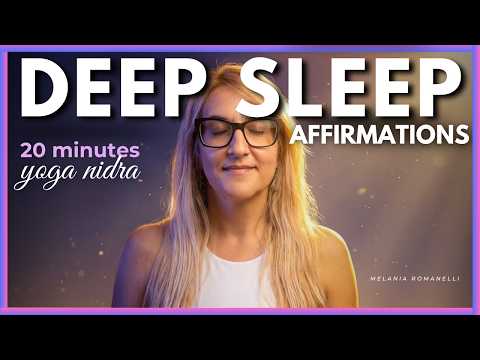
If you would rather be guided than remember the steps, this one is made for the middle of the night. Start it without looking at the screen and let it run.
One more thing
A bad night is survivable. Most of the damage people report comes from the day spent dreading the consequences of it rather than from the lost hours themselves. You will get through tomorrow, and tomorrow night your body will push for deeper sleep on its own.
If waking is happening most nights and you cannot get back down, that is worth a conversation with a doctor rather than another breathing technique. Yoga nidra helps a lot of people through difficult nights, but it is not a treatment for insomnia.
Questions people ask
Why do I wake up at 3am specifically?
Sleep runs in cycles, and the second half of the night is lighter, with more of it spent in stages you surface from easily. Body temperature and hormone levels are also shifting around then. Brief waking in that window is normal — most people simply fall back asleep and never remember it.
Should I get out of bed if I cannot fall back asleep?
If you have been awake and frustrated for roughly twenty to thirty minutes, yes. Staying in bed while agitated teaches your body to associate the bed with being alert. Go somewhere dim, do something undemanding, and return when you feel sleepy.
Is it bad to check the time?
It rarely helps. Once you know the number, you start calculating how much sleep is left, and that calculation is stimulating. Turning the clock away or putting the phone out of reach removes the option entirely.
Can I use my phone if I keep the brightness low?
Low brightness helps, but the content is the bigger issue. Messages, news and email give your mind something to work on at exactly the moment you want it idle. If you want audio, start it without looking at the screen.
When should I speak to a doctor?
If you wake most nights and cannot get back to sleep, if you wake gasping or with a racing heart, or if daytime tiredness is affecting how you function. Persistent insomnia and sleep apnoea are treatable, and neither is fixed by breathing exercises alone.
Build the habit before you need it
The free 7-Day Sleep Reset gives you a short practice each night for a week, so the shapes are familiar by the time you wake at three.
Get the 7-Day Sleep Reset — freeThis article is for general education and is not medical advice. If sleep problems persist, please speak with a doctor. See the full disclaimer.